

The New Era Urgently Requires the Construction of a New Smart Heating System
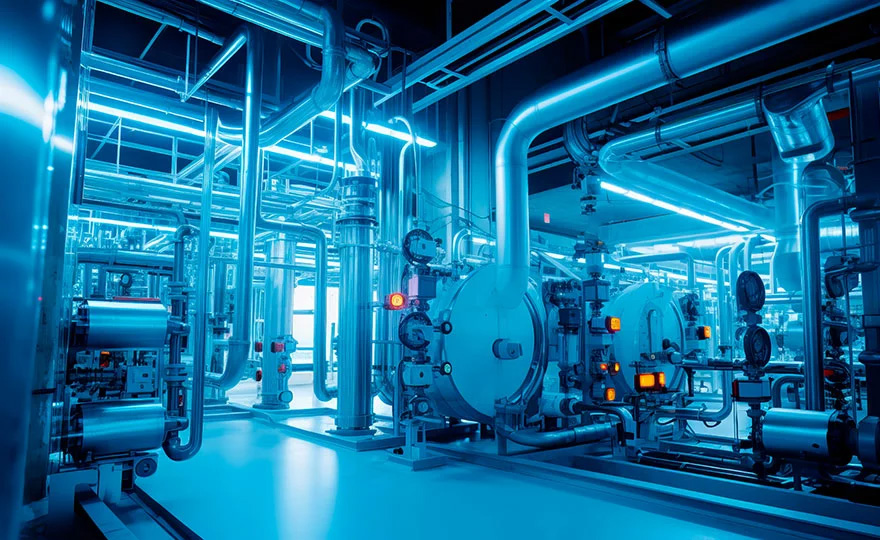
Another year of heating season, another year of supply guarantee. In recent years, facing the complex and severe domestic and international situation and numerous risks and challenges, China's energy green and low-carbon transition is confronted with more complex circumstances, and energy security has been elevated to a more important strategic level. Heating energy consumption accounts for a relatively large proportion in China's energy consumption structure, and heating security is an important component of energy security.
Heating systems currently have prevalent problems such as high proportion of fossil energy heat sources, difficulties in thermal balance regulation, coexistence of excessive heating and insufficient heating, insufficient system flexibility, extensive management, low level of intelligence, and inability to flexibly adjust according to actual weather changes and specific demands, resulting in high heating coal consumption and serious energy waste. To accelerate the construction of a new energy system, the heating industry should fully emphasize systematic energy conservation and carbon reduction, comprehensively enhance the energy efficiency and intelligence level of heating systems, accelerate the transformation from traditional heating to modern heating, and construct a new intelligent heating system that is safe and low-carbon, clean and efficient, economical and intelligent, contributing to society-wide carbon peak and carbon neutrality.
To implement the requirements of "Opinions of the CPC Central Committee and the State Council on Completely, Accurately and Comprehensively Implementing the New Development Philosophy and Doing a Good Job in Carbon Peak and Carbon Neutrality" and other relevant documents, comprehensively improve heating system energy efficiency, ensure safe and stable heat supply, and guarantee that people have a warm winter, since 2023, the National Development and Reform Commission has explicitly included all winter heating coal in northern regions into the long-term contract system for guarantee, and together with the Ministry of Housing and Urban-Rural Development and other departments, has successively issued relevant opinions on improving urban centralized heating price mechanisms and deepening heating metering reform, accelerating the promotion of high-quality, healthy and sustainable development of the heating industry.
The heating industry is an important component of the new energy system
Building a new energy system requires coordinating security and development, balancing supply guarantee and transformation, and harmonizing regulation and flexibility. It is necessary to solve the "multivariate equation" of reliable new energy replacement under multiple objectives, constraints, and variables, achieving organic unity between "planning for the whole" and "planning for one area," as well as "planning for a generation" and "planning for the moment." This involves properly handling coordination between the system and its parts, long-term and instantaneous needs, relying on innovation-driven development, making concerted efforts across all links of source-grid-load-storage, and forming a new situation of coordinated development in carbon reduction, pollution reduction, ecological expansion, and growth. Currently, building a new energy system still faces many challenges, including the lack of reliable replacement by new energy power generation, prominent contradictions in the spatiotemporal imbalance between new energy supply and demand, increasing pressure on new energy consumption, and enhanced difficulty in safe and stable system operation. With the continuous increase in the proportion of terminal electricity consumption and frequent extreme weather events, the national peak electricity load has increased significantly, with an expected increase of 80 to 100 million kilowatts in 2023 compared to 2022.
Heating/cooling has become the primary cause of winter/summer peak loads. According to load characteristic analysis across the country, heating/cooling is an important reason for the continuous rapid rise in maximum load in recent years, with a contribution rate of nearly 50% to the maximum load growth. In some regions, cooling/heating load accounts for more than 1/3 of the maximum load. According to the "China Power Development Report 2023", in the summer of 2022, the national air conditioning load reached a maximum of approximately 400 million kilowatts, an increase of 60 million kilowatts year-on-year, with air conditioning load increment accounting for 80% of the total load increment. In major cities such as Beijing, Shanghai, and Chongqing, air conditioning load proportion has exceeded 50%, and in multiple provinces in the Yangtze River basin, the proportion also exceeds 40% and continues to increase. During the 2022 summer peak period, for every 1℃ increase in national average temperature, national power load increased by approximately 35 million kilowatts; during the winter peak period, for every 1℃ decrease in national average temperature, national power load increased by approximately 8 million kilowatts. As the proportion of electric heating increases, winter load sensitivity to temperature will continue to increase. Peak loads are characterized by large scale, short duration, and low frequency. Relying solely on new reliable power capacity (combined with capacity price mechanisms) to meet continuously growing peak loads is undoubtedly the highest system cost approach. It is necessary to fully mobilize cooling and heating loads to actively participate in demand-side response, and develop thermal (cooling) energy storage for peak shaving and valley filling to meet peak load demand more economically. Therefore, in the future, cooling and heating loads must fully participate in the electricity market.
The heating industry is a field with significant difficulty in dual control of energy consumption and energy transformation. The heating industry is a high energy consumption and high carbon emission industry. According to data from the Building Energy Conservation Research Center of Tsinghua University, heating energy consumption in northern China's urban areas exceeds 200 million tons of standard coal, with carbon emissions of approximately 550 million tons, accounting for 26% of building carbon emissions and 5.7% of total societal carbon emissions. Energy conservation and carbon reduction in the heating industry are of great significance to achieving carbon peak and carbon neutrality for society as a whole. In terms of energy structure, nearly 60% of winter heating in northern China relies on fossil fuels, primarily clean coal-fired centralized heating, accounting for approximately 40%, followed by natural gas heating at approximately 18%, electric heating at less than 10%, while renewable energy sources (mainly geothermal and biomass), waste heat and other heat sources serve only as supplements. In severely cold regions such as the three northeastern provinces, urban areas rely almost entirely on clean coal-fired centralized heating (approximately 96%). Under the premise of ensuring heating security, large-scale promotion of green and low-carbon heat sources is difficult due to restrictions from climatic environment, resource endowment, and technological applicability.
The thermal system provides a huge buffer pool for the safe regulation of the power system. Electricity and heat have strong complementarity in terms of balance, stability, storage and other characteristics. Electrical energy is difficult to store on a large scale, and the generation, transmission, distribution and use of the power system need to be balanced in real time, while thermal energy is easy to store on a large scale, and the thermal system has strong thermal inertia. Compared with electricity storage, thermal (cold) storage achieves lower-cost energy storage (1/5-1/10 of electricity storage), larger scale (can achieve several days to seasonal), higher safety storage and can be directly and simply utilized. In China's energy system, the heating network system is an energy "storage pool" and "buffer" with a scale of hundreds of millions of tons of standard coal, and the storable energy is equivalent to half of the current total energy storage capacity of pumped storage. Through its own digital and intelligent upgrading and construction, the thermal system enhances its observable, measurable, adjustable and controllable performance, which can greatly promote the overall optimization of the new power system, make room for new energy consumption in time and space, and thereby improve the national energy security guarantee capability.
The Connotation of the New Intelligent Heating System
Intelligent heating in the narrow sense mainly refers to the upgrading and optimization of the heating system itself. It refers to the intelligent upgrading and transformation of each link of "source-network-station-household" under the existing centralized heating network system based on heating informatization and automation, and through the comprehensive regulation of the intelligent heating platform, to achieve information interconnection of the whole process of the system, intelligent decision-making of heating control, and scientific decision-making based on models and data.
The new intelligent heating or broadly defined intelligent heating, under the strategic coordination of building a new energy system and constructing a new power system, requires the heating industry to achieve transformation and upgrading by "looking inward" and "looking outward," and to achieve full-domain coordination of "source-network-load-storage," coordination between heating systems and power systems, and coordination between metering and control.
The new intelligent heating takes energy conservation, carbon reduction, and improvement of heating safety assurance capability as its main goals, and is based on heating informatization, automation, and digitalization. Through deep integration of new-generation information technology with the entire process of "source-network-load-storage" in heating systems, it achieves on-demand heating and precise heating. Its scope covers promoting coal-fired power heating transformation, energy-saving and carbon-reduction transformation of heating pipe networks, building energy-saving transformation, promoting multi-energy complementarity, big data regulation and dispatching systems and platforms, and heating metering, synergistically advancing energy conservation, pollution reduction, carbon reduction, and greening expansion, comprehensively enhancing the safety, efficiency, green and low-carbon level of heating systems, and ensuring residents have a clean, warm and comfortable winter.
Building a new intelligent heating system is the main pathway for high-quality development of the heating industry. It can solve problems such as uneven heating distribution and excessive cold or heat for residential users, achieving precise heating and on-demand heat use. For heating enterprises, with an average energy-saving rate exceeding 20%, it can significantly reduce heating costs, improve heating capacity, increase heating area, and enhance heating safety assurance capability and refined management level. For local governments, it can significantly reduce fiscal subsidy pressure and improve energy consumption and carbon emission management levels. For society as a whole, it can significantly save energy and reduce carbon emissions, which is of great significance for ensuring energy security and achieving carbon peak and carbon neutrality goals.
Heating metering and control is a necessary component of building a new intelligent heating system. The metering of materials, heat, power consumption, pressure, temperature and other parameters at each link of source-network-station-household is the foundation for heating system regulation, energy consumption dual control and carbon emission dual control. Heating metering plays a fundamental, strategic and supporting role in building a new intelligent heating system. According to statistics, household terminal heat loss accounts for more than 70% of the entire heating process. The main reason is the lack of effective technical equipment at the household terminal for accurate heat metering, which prevents the heating system from achieving refined regulation and closed-loop control. Therefore, it is crucial to solve the refined regulation of the household terminal and open up the "last mile" of the system in the future. Heating metering is not equivalent to metering-based charging in the narrow sense. Heating energy conservation is mainly reflected in system energy conservation, especially from the secondary network to the terminal. The core of heating metering lies in collecting and providing necessary regulation data, which is the data foundation for intelligence, while charging based on heating metering is only a matter of charging mode, aiming to promote behavioral energy conservation with limited contribution to energy conservation. In the long term, as the building energy efficiency level continues to improve, the heating energy consumption level and heating cost continue to decrease, residents will prioritize the metering-based charging mode, and the two-part heat price is conducive to rationalizing heating costs and establishing a more scientific heating price formation mechanism.
Heat-electricity coordination is an important measure for source-grid-load-storage integration. Electricity substitution is a development trend in the terminal energy consumption sector. It is expected that by 2060, electricity will account for more than 65% of terminal energy consumption, with an average annual increase of about 1.0 percentage point. During the "14th Five-Year Plan" period, newly added electricity consumption from electricity substitution will reach over 800 billion kWh, with an average annual electricity substitution volume of 150-200 billion kWh. Thermal systems have strong thermal inertia, and electric heating equipment has rapid response speed, which can adapt to the fluctuation characteristics of renewable energy. For terminal heating scenarios, it can replace energy storage batteries to meet power peak regulation demand and achieve heat-electricity decoupling. Therefore, heating (cooling) loads can serve as adjustable loads to fully participate in power peak and frequency regulation, providing load space for renewable energy consumption. In particular, heating (cooling) loads have good matching characteristics with wind power (photovoltaic) in terms of seasonal and intra-day output characteristics.
Policy Recommendations for High-Quality Development of the Heating Industry
Promoting the construction of new intelligent heating systems, on the one hand, from an overall perspective, based on a comprehensive energy saving rate of 15%-20%, an average heating energy consumption of 12kgce/m2, a system construction investment intensity of 15 yuan/m2, and current standard coal prices for rough estimation, assuming that all urban centralized heating areas are retrofitted, it could save 30-40 million tons of standard coal annually, reduce carbon dioxide emissions by 75-100 million tons, with a total investment of about 200 billion yuan and a static investment payback period of about 6-7 years. The social and environmental benefits are relatively high, but the economic attractiveness is weak for most enterprises, requiring the government to play a certain guiding role. On the other hand, most heating companies have faced significant heat price inversion issues in recent years, experiencing operational difficulties, weak investment capacity, and lack of financing channels.
Constructing a new intelligent heating system is a systematic project that requires not only addressing the problems of energy shortages and cost transmission difficulties faced by heating enterprises, improving price and cost transmission mechanisms, and ensuring supply security, but also strengthening top-level design, conducting systematic planning, reinforcing policy guidance, and accelerating the high-quality development of the heating industry.
(1) Strengthen Energy Supply Security Capacity
It is recommended to strengthen the supply and reserve capacity of heating coal and natural gas, incorporate all residential heating coal in northern regions into the long-term contract system regardless of enterprise size and nature, strictly implement the "3 100%s", strengthen supervision and verification, ensure contract fulfillment and redemption rates, properly respond to extreme cold weather, supply disruptions and other special situations, and ensure that people's heating is not affected.
(2) Establish Multi-Energy Complementary Coordination Mechanism
On the heat source side, promote multi-energy complementary systems, advance the flexible, coupled, and low-carbon transformation of combined heat and power units, promote low-carbon heating technologies such as biomass, various new types of waste heat, and electric heating according to local conditions, implement the "new energy + heating" model, establish a four-party cooperation mechanism of "government-grid-new energy enterprises-users", adopt marketized electricity trading and differentiated transmission and distribution prices, and achieve a win-win situation of "government wants green, enterprises want profit, residents want warmth".
(III) Improve the Heat Supply Cost Transmission Mechanism
Adhere to the basic positioning of urban centralized heating as a safeguard livelihood project, persist in combining price compensation and fiscal compensation, clarify the responsibilities of enterprises, government, and users, with each link following "market to market, government to government", changing from "hidden subsidies" to "explicit subsidies"; promptly research and establish a heat price formation mechanism, improve the government investment mechanism, ensure that heat prices are linked within a reasonable range, and guarantee safe and stable heat supply.
(IV) Strengthen Research, Development and Innovation of Technologies and Equipment
Encourage technological innovation and basic research and development, accelerate the promotion and application of advanced heating measurement and control technologies and smart heating system solutions, improve relevant technical standard systems, promote the new generation of full-function, long-life, low-cost, easy-to-install-and-maintain household and building heat metering and control integrated devices, carry out project demonstration pilot work, and form replicable and scalable solutions.
(V) Promote Heat Metering According to Local Conditions
Adhere to the principle of "classified measures, orderly implementation, and safety guarantee" to advance heat metering work.
First, strengthen metering and control, focus on energy-saving effectiveness, and ensure that actual results meet the requirements of heating system balance, metering, and room temperature control.
Second, adhere to classified policies and prioritize household-level metering. The flow rate, temperature, and pressure data of each household reflected by household heat meters are key parameters required for smart heating control at the household level. They are important support for solving terminal hydraulic imbalance, uneven heating and cooling among residents, over-supply and under-supply issues, as well as future participation in carbon markets and adaptation to new energy systems. For heating metering renovation of existing buildings, measures should be tailored to local conditions and implemented step by step. Household heat meters and household control devices should be installed in buildings that have the installation conditions and meet the balance and control requirements.
Third, promote metered charging to encourage behavioral energy conservation. Encourage new buildings and existing buildings with suitable conditions to implement household-level metered heating charges. For existing residential buildings that cannot yet meet household-level metering conditions, metering can be conducted by building, with costs allocated by area.
(6) Broaden Funding Sources through Multiple Measures
First, it is recommended to include new smart heating projects in the scope of central budget funding support for national energy conservation and carbon reduction, old residential community renovation, and local government special bond support, and to encourage qualified heating infrastructure projects to issue REITs products.
Second, it is recommended that policy financial institutions include new smart heating projects in urban renewal projects and provide low-interest loan support.
Third, encourage government-guided funds, central enterprise industry funds, infrastructure construction funds, and other social capital to invest in heating energy conservation projects, and promote the participation of energy consumption indicators obtained from heating energy conservation renovations in local energy rights market transactions.
FAQ
QWhat are the core changes of the new smart heating system compared to traditional centralized heating?
AThe core lies in the shift from experience-based dispatching to data-driven closed-loop regulation, making key parameters of source-network-station-household observable, measurable, adjustable, and controllable. Beyond improving automation of pipe networks and heat exchange stations, it emphasizes full-domain coordination of source-network-load-storage and coordinated operation with the power system. The goal is to achieve on-demand and precision heating, reducing waste caused by the coexistence of excessive heating and insufficient heating.
QWhy is heating metering and regulation considered a necessary link in advancing smart heating?
AMetering provides fundamental data for regulation, determining whether the system can achieve model-based analysis, refined adjustment, and performance evaluation. Heat loss at the household end accounts for a relatively high proportion. Without effective metering and data feedback at the terminal, closed-loop control from the secondary network to the user side cannot be formed, making the last mile a bottleneck. Metering is not equivalent to metered billing; billing models mainly affect behavioral energy saving, while system energy saving relies more on available data and coordinated regulation capabilities.
QWhere is the value of thermal-power coordination reflected in smart heating, and where should enterprises start?
AHeat networks possess thermal inertia and low-cost large-scale heat storage capacity, serving as a buffer pool for peak shaving in power systems and creating temporal-spatial flexibility for new energy consumption. Electric heating equipment responds quickly and can participate in demand-side response and electricity markets by treating heating and cooling loads as adjustable loads, reducing system costs of purely adding new power sources to meet peak loads. Implementation can start with multi-energy complementarity at the heat source side, flexible transformation of combined heat and power generation, construction of heat (cold) storage facilities, and integration of platform-level dispatching and metering data, gradually achieving thermal-power decoupling and coordinated optimization.
