

Integrated Temperature Control and Metering Solution
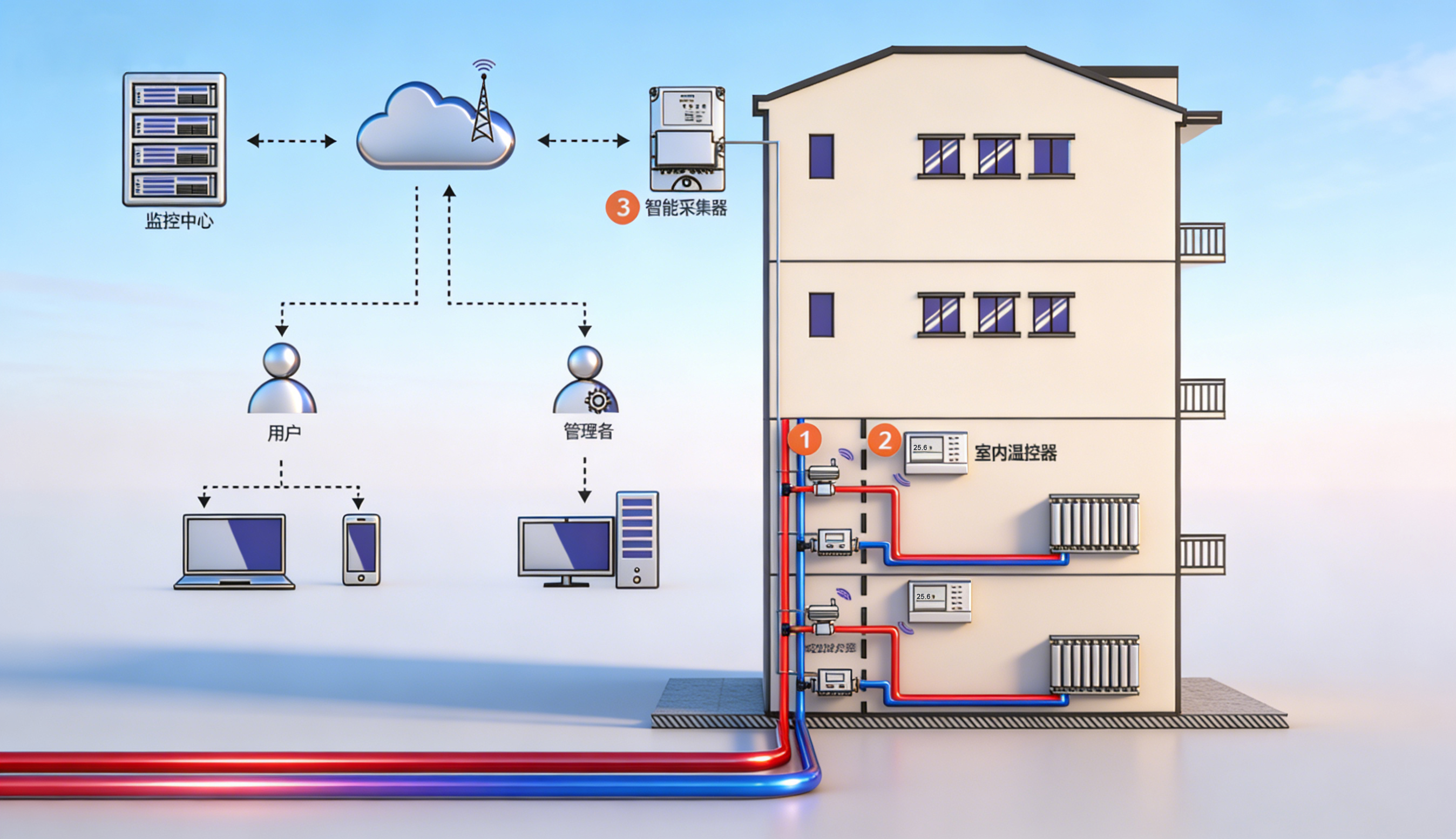
The integrated temperature control and metering heat measurement system is an energy-saving system solution that combines household heat meter sub-metering and intelligent room temperature control technology.
This solution uses household heat meters to measure the heating heat consumption of users. Users adjust the temperature control panel installed indoors according to their heating needs, and wirelessly control the opening and closing of temperature control valves to achieve precise room temperature regulation and energy-saving purposes.
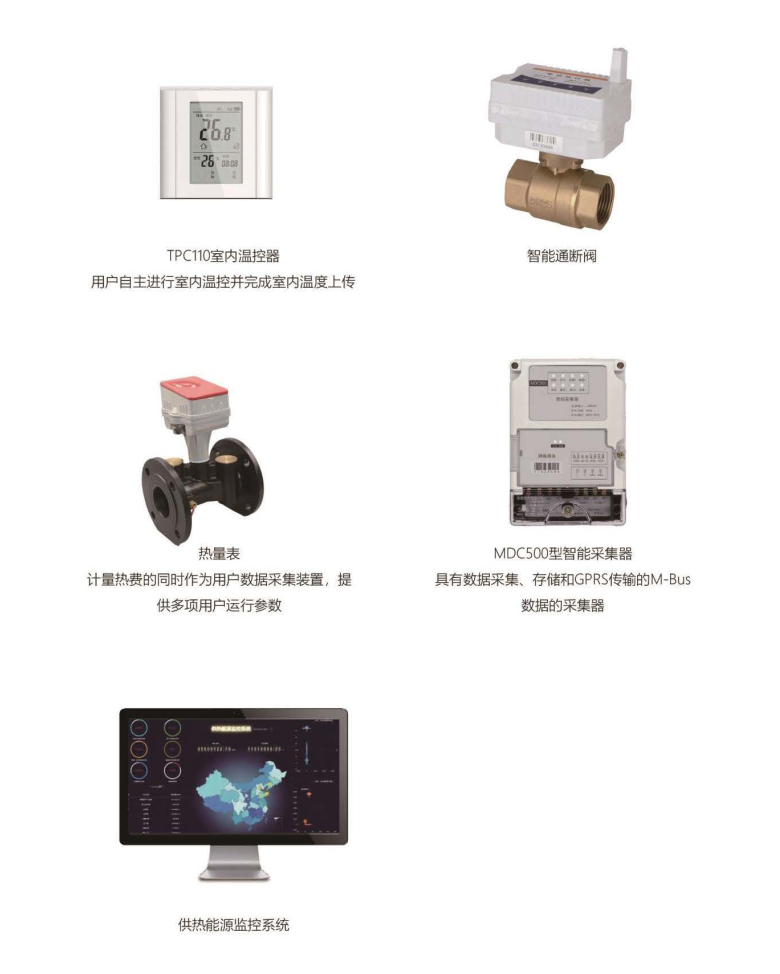
Product Components:
FAQ
QWhat is the core working principle of the integrated temperature control and metering heat measurement system?
AThe system uses household heat meters to measure the heating heat consumption of each household, while the indoor temperature control panel provides the interface for setting and adjustment. The temperature control panel controls the opening, closing or on-off of the temperature control valve wirelessly, changing the terminal flow and heat supply to achieve fine-tuned room temperature regulation. Metering results can be used for household billing and energy consumption analysis, while control enables on-demand heating.
QWhat key equipment and modules are typically included in this solution?
AThe basic configuration usually includes household heat meters, indoor temperature control panels, controllable temperature control valves, and wireless communication modules. Heat meters are responsible for collecting heat-related data, temperature control panels are responsible for setting target temperatures and strategies, and temperature control valves execute regulation actions. To form a complete system, a data aggregation and management platform is often required for meter reading, parameter configuration, and operation monitoring.
QWhat conditions need to be focused on when deploying in residential communities or buildings?
AIt is necessary to verify the existing heating system format and terminal control conditions, ensure that the installation location, diameter, and interface of the temperature control valve match, and ensure that the valve action has a controllable impact on hydraulic conditions. Wireless communication needs to evaluate coverage and interference environment, determine equipment placement, network solutions, and subsequent maintenance methods. Metering caliber and settlement rules should also be clarified, and parameter calibration, joint debugging, and acceptance procedures should be completed during the installation and commissioning phase.
