

Focus on Smart Heating: How Long Until We Say Goodbye to 'Top Floor Opens Windows, Ground Floor Wears Coats'?
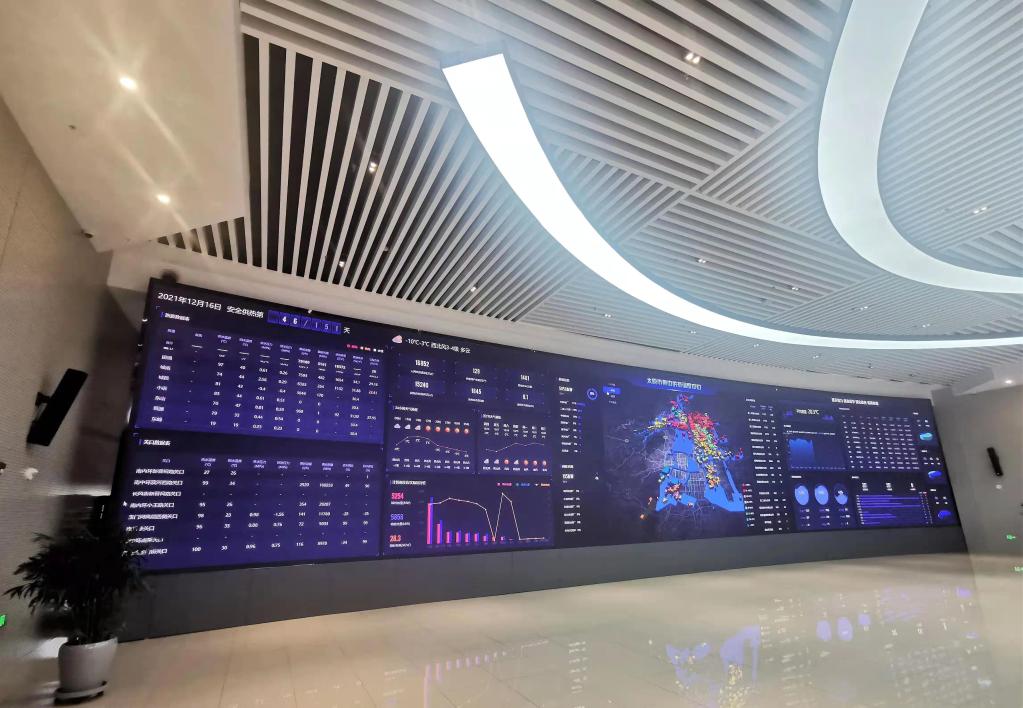
For years, in northern China with centralized heating, situations of "under-supply" and "over-supply" have occurred frequently, and it is also common to see "upper floors opening windows while lower floors wearing coats." However, this situation is quietly changing.
Reporters from "Xinhua Viewpoint" recently investigated in Beijing, Liaoning, Hebei, Shanxi and other places, and found that in recent years, smart heating, which transforms traditional heating networks through information technology, is entering a period of accelerated development.
Niu Xiaohua, Executive Deputy Secretary-General of the China District Heating Association, said that China's current heating supply has not yet been fully commercialized, and in the future it should shift from a "heating by schedule" model to an "on-demand heating" model, achieving an intelligent heating operation method mainly based on end-user control, allowing ordinary people to obtain heat and comfortable heating at any time according to their needs, and promoting the industry to achieve carbon peak and carbon neutrality goals as soon as possible.
She believes this is a "tremendous transformation" for the heating industry.
Centralized heating intelligentization accelerates in many places, with improved efficiency and reduced costs
Suppose we could see through from high above, beneath northern Chinese cities, there exists a crisscrossing, massive heating pipeline network. During the depths of winter, these pipelines continuously deliver thermal energy to thousands of households. Previously, these pipelines relied on manual control, sometimes resulting in unstable heating supply and uneven room temperatures. In some cases, within the same building, people living on the top floor would be so hot they had to open windows, while those living on lower floors had to wear cotton coats even indoors. Some industry insiders say that the hydraulic imbalance rate of national heating systems exceeds 30%.
In recent years, with the increase in residential heating demand, the scale of heating supply nationwide has been continuously expanding, and problems such as insufficient heat sources, uneven temperatures, and high energy consumption in traditional heating modes have become increasingly prominent. Interviews with reporters have found that many cities are experimenting with smart heating. The new heating mode that combines information technology with traditional heating networks has created more possibilities for improving user experience, enhancing enterprise efficiency, and achieving energy conservation and emission reduction.
Dingxiu Jinshi Garden, located on Jinqiao East Street in Fengtai District, Beijing, is one of the first batch of smart heating pilot communities of Beijing District Heating Group. In the past, at the beginning of the heating season, a large number of workers were needed to manually adjust valves and control the heat flowing into each building based on experience, which was not only slow but often inaccurate, requiring repeated adjustments.
After the pilot project, the community installed electric control valves in each unit and room temperature collectors in residents' homes. The artificial intelligence heating network control system collects user room temperature data, predicts the required heat in combination with weather forecasts, and issues instructions through the monitoring platform to scientifically distribute heat to each unit.
After the renovation, residents found that the temperature in their homes could be automatically adjusted according to needs. According to statistics, before the renovation, 11.3% of users in the community had room temperatures below 20℃ during the heating season, and 52.1% of users had temperatures above 24℃; in the first year after the renovation, 90% of users had temperatures between 20 and 24℃. In addition, the complaint rate was reduced by 30% year-on-year, costs were reduced by 290,000 yuan, and the peak load of the heating station was reduced by 17.54%. Resident Zhang Yanling said: "It's much more comfortable at home, and we can save about three to four hundred yuan a year."
In Hebei, over 90% of the primary heating network from heat sources to heat exchange stations across the province has been intelligently upgraded, and efforts are currently being accelerated to explore intelligent construction of the secondary heating network from heat exchange stations to users. "The intelligent construction of secondary heating networks is an important pathway to achieving the 'dual carbon' goals," said Xu Jingjie, a first-level researcher at the Hebei Provincial Gas and Heat Service Center.
Li Yue, Deputy General Manager of Hebei Tangshan Caofeidian Heating Co., Ltd., said that compared to before using the intelligent heating system, the Caofeidian Industrial Zone can save 37.5 million yuan in heating costs annually, and reduce carbon dioxide emissions by 113,000 tons, sulfur dioxide emissions by 915 tons, and soot emissions by 458 tons.
In Shanxi, the Zaojian Liang heating station of Taiyuan Heating Group's Taigu Branch covers two residential communities with 896 households. Station chief Su Chengfei can check the status of the heating station anytime through a mobile app, with data such as supply water temperature, return water temperature, pressure values, heat quantity, and flow rate clearly displayed.
Staff at Zaojian Liang heating station of Taiyuan Heating Group's Taigu Branch checking data through the app. Photo by Xinhua News Agency reporter Wang Hao
"Previously, every heating station required on-site staff, with at least 3 people per day working in three shifts, which meant over 5,000 people for more than 1,800 heating stations," said Shi Guanghui, Director of the General Dispatching Office of Taiyuan Heating Group. Now, over 80% of the city's stations are unmanned.
Residents' expectations for heating have shifted from "available when needed" to "how well it works"
Ms. Shen, a resident of the Old Mining Department Community in Wanbailin District, Taiyuan City, Shanxi Province, said that in previous years, the heating in her home was always alternating between cold and warm, and the aging pipes leaked, causing a lot of trouble. After installing smart equipment, the temperature at home became balanced and comfortable, maintaining around 22℃.
Some "office workers" in Beijing expect more flexible heating—when no one is home during work hours during the day, the temperature can be lowered a bit. And the central air conditioning in office buildings is usually very hot; it would be great if each room could adjust the temperature.
Mr. Zhao, a resident living in Shenyang, told reporters that in the past, the requirement for heating was "available when needed," but now it has become "whether it works well."
In addition, the hard constraints of the carbon peak and carbon neutrality goals are becoming increasingly influential, and the low-carbon and green transformation of energy structure, as well as technological, digital, and intelligent innovation, continue to strengthen. In comparison, the weaknesses of traditional centralized heating methods—high latency, strong coupling, and multiple constraints—are very prominent.
Yin Bo, a relevant official from the Heating Office of Beijing Municipal City Management Committee, introduced that centralized heating is a demand-driven regulation method based on supply. Due to differences in building envelope structures, terminal heating forms, distribution pipeline lengths, etc., when heat is distributed through the heating system, it is prone to hydraulic imbalance and thermal imbalance phenomena, and manual adjustment is difficult to achieve balanced heat distribution according to demand.
Li Yue said that to ensure the heating effect for some users, heating companies often adopt the method of increasing the overall heating supply to meet the needs of all users, resulting in tremendous waste of total thermal energy and also exacerbating environmental pressure.
According to Li Yue, based on actual heating parameters in North China, every 1℃ increase will cause 3.7% energy waste, equivalent to a national waste of approximately 160 million tons of standard coal, and additional emissions of 397 million tons of carbon dioxide, 3 million tons of sulfur dioxide, and 1.6 million tons of soot.
Beijing Heating Group has launched a three-year action plan for intelligent transformation of the heating system. In actual work, efforts will be advanced in three aspects: rapid manual balancing based on intelligent algorithms, automatic control of heating stations based on secondary system hydraulic balancing, and precise regulation combined with room temperature.
Challenges exist in technological innovation and renovation of old residential areas
Experts point out that the intelligent transformation of centralized heating networks is a systematic project involving multiple fields such as technological innovation and renovation of old residential areas, and there are currently some common challenges in local explorations.
Excessively high renovation costs are a major constraining factor. Due to the public welfare nature of the heating industry, heating fee pricing remains government-guided. As prices of coal, gas, electricity, water and other energy sources as well as labor costs continue to rise, enterprises bear significant operational pressure and lack sufficient motivation to invest in large-scale intelligent transformation. In some areas, cost inversion has left heating enterprises unable to carry out intelligent construction of secondary pipe networks from heat exchange stations to users.
Industry insiders also indicate that in areas with a high proportion of old residential communities, building envelope insulation is poor, and the proportion of heating pipes within buildings that have been in use for over 25 years and require replacement is very large, necessitating continued advancement of building energy efficiency and heating infrastructure renovation.
Zhao Wenlan, Deputy General Manager of Shuozhou Renewable Energy Heating Co., Ltd. in Shanxi Province, explained that in addition to limited capital investment, the quality of various smart heating facilities varies greatly. Equipment selection requires extensive comparison and long-term testing to meet local conditions, and there is a shortage of professionals for operating and upgrading smart heating platforms.
Shen Pengfei, a technician at the General Dispatching Office of Taiyuan Heating Group, said that terminal temperature measuring devices have currently been installed in over 10,000 households, but user cooperation rates are not high. Some users place temperature measuring devices at windows or even outside doors, resulting in inaccurate temperature readings. "The next step is to cooperate with telecommunications companies and big data departments to support or add more practical functions and services in order to successfully retrieve data."
In the view of relevant officials at Tangshan Caofeidian Heating Co., Ltd., relevant departments should strengthen top-level design, accelerate the formulation of relevant standards and specifications to form a unified system, while also combining heating system reform and heating legislation work to promote technological innovation and industrial upgrading in the heating industry.
Industry insiders believe that as heating equipment in some regions approaches the period of centralized renewal and replacement, this opportunity should be seized to accelerate smart heating work. Governments can establish special funds to share costs with heating companies, and continue to promote heating metering and charging reform and heating price marketization. In addition to pursuing comfort, residents should also enhance their awareness of green heating.
Du Wenzhi, General Manager of Shijiazhuang Western Suburb Heating Co., Ltd., suggests that newly constructed residential buildings should incorporate intelligent heating control systems into their supporting construction scope, with heating enterprises responsible for acceptance inspection, thereby reducing secondary investment costs for heating enterprises. Meanwhile, support should be provided to heating enterprises to accelerate the intelligent transformation of heating facilities in existing buildings such as old residential communities. A comfortable temperature range for centralized heating should be established to regulate residents' heating behavior and achieve self-regulation of temperature to reduce energy consumption.
FAQ
QWhat are the key differences between smart heating and traditional centralized heating?
ATraditional centralized heating relies mostly on manual experience-based adjustments, operating on a supply-driven model, which easily leads to hydraulic and thermal imbalances, resulting in significant temperature differences between units in the same building. Smart heating integrates heating network operational data and indoor temperature data into a platform, combining weather forecasts and algorithms to automatically allocate heat. The core change is shifting from time-based heating to on-demand heating, emphasizing terminal control and refined operation.
QWhat components typically need to be upgraded when deploying smart heating, and how can implementation be phased?
ACommon upgrades include data collection and monitoring for heat sources and primary networks, automated control of heat exchange stations, hydraulic balancing of secondary networks and electric control valves for buildings/units, as well as indoor temperature collection and linked regulation. When resources are limited, starting with heat stations and hydraulic balancing of secondary systems to stabilize heat distribution first, then gradually expanding to precise household-level control is advisable. For new residential developments, intelligent control systems can be incorporated into supporting construction to reduce subsequent investment and construction difficulty.
QWhat are the main challenges in implementing smart heating, and how can implementation risks be reduced?
AChallenges are concentrated in renovation funding and return on investment, insulation and aging pipelines in old residential areas, equipment quality and selection variations, platform operation and maintenance and talent shortages, and user cooperation affecting temperature data authenticity. Risks can be reduced through government special funds or cost-sharing mechanisms, synchronizing with building energy efficiency renovations, establishing standards and acceptance systems. On the data side, sensor installation specifications and user communication should be strengthened, and collaboration with communication and data capability partners should be enhanced to improve data collection and service closed-loop.
