

Smart Heating Empowers Clean Heating from 'Availability' to 'Quality'
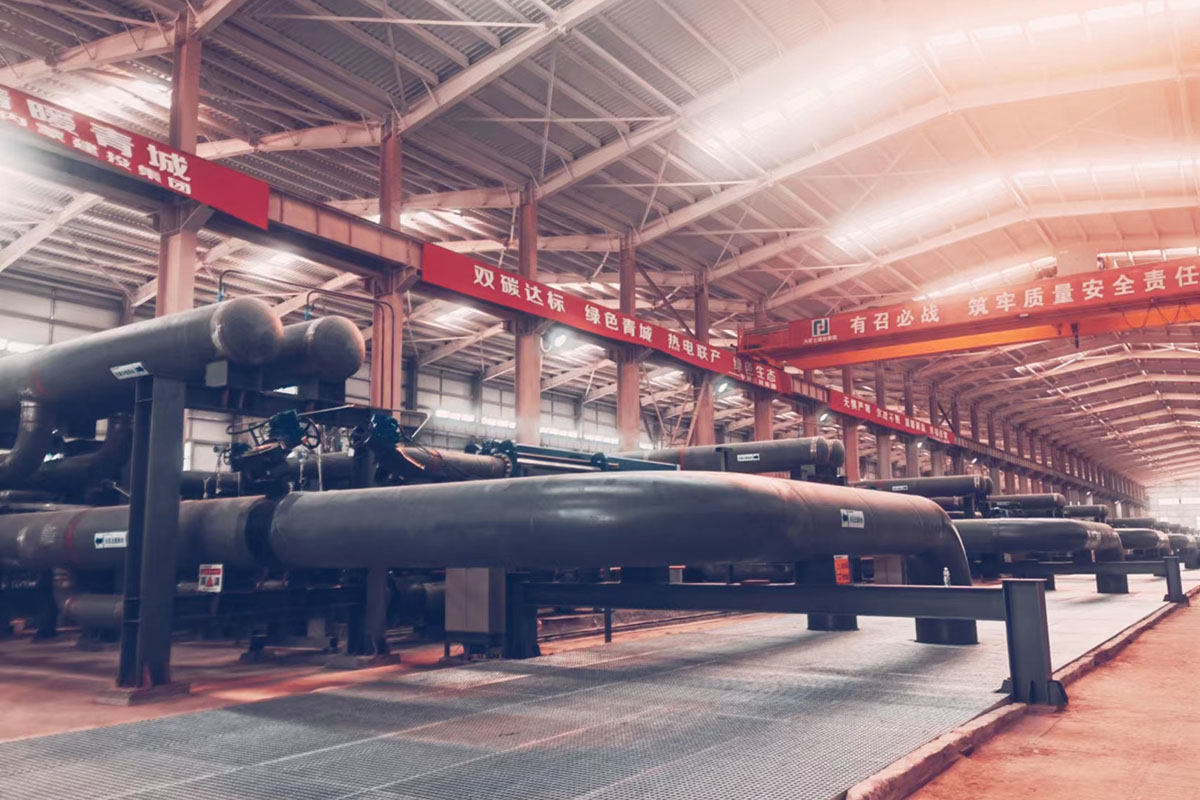
As we are now in the heating season, how to achieve clean heating, on-demand heating, and precise heating has become a hot topic. "When it comes to heating, the most talked about now is 'digitalization, intelligence, cleanliness, and carbon neutrality'. To do well in the heating industry, we need to not only vigorously develop clean energy such as wind power, photovoltaic, hydropower, geothermal energy, biomass energy, hydrogen energy, and nuclear energy, but also empower heating with technology." Recently, at the 2024 Low-Carbon Heating Conference and the 6th Clean Heating Industry Development Forum held in Xiong'an New Area, Li Deying, Vice President of China Association of Building Energy Efficiency, said.
Clean heating has solved the problem of "whether there is or not", and it is necessary to further solve the problem of "whether it is good or not". Many experts stated that "to improve enterprise operational efficiency, smart heating systems must be put on the agenda."
■ Using Clean Energy from the Source
"Energy, as the foundation and driving force of urban construction and development, must be cleaner, more efficient, and lower in carbon. We firmly adhere to this concept and approach, make full use of our own resource advantages, and accelerate the development and utilization of renewable energy such as geothermal energy and solar energy." Kong Tao, Deputy Director of the Reform and Development Bureau of Xiong'an New Area, said that currently, the geothermal energy heating capacity of Xiong'an New Area has reached 8.22 million square meters, and it is expected that another 13.72 million square meters will be put into operation next year. The installed capacity of photovoltaic and biomass power generation has reached more than 120 megawatts, and the 1000 kV ultra-high voltage line from Zhangjiakou North to Xiong'an has been completed, with green electricity from Zhangjiakou North directly supplied to the new area.
As the investment, construction, and operation entity for heating, gas, and other energy businesses in Xiong'an New Area, Xiong'an Group Smart Energy Co., Ltd. was established in May 2022 and is currently responsible for ensuring heating and gas supply in five newly built areas of the new district: Rongdong, Rongxi, Xiongdong, the Starting Area, and the High-Speed Rail Station. Zhang Lei, Deputy General Manager of the company, told reporters: "The heating area is approximately 11.6 million square meters. We have put into operation 10 integrated energy stations, 13 pairs of medium-deep geothermal wells, and 1,060 shallow geothermal wells, with renewable energy accounting for 10%. In the future, the proportion of renewable energy in the new district is expected to reach over 40%."
Currently, Shandong, Henan, and other regions are also actively utilizing clean heating. "We are vigorously developing renewable energy sources such as geothermal energy, and by using geothermal cascade utilization technology and 100% reinjection technology, we have played a significant role in energy conservation and emission reduction in Shandong's clean heating sector," said Li Wenbin, Chief Expert of CHN Energy Xiong'an Energy Co., Ltd. Today, the group has been gradually expanding the application of "geothermal+" technology in areas such as modern facility agriculture and crude oil gathering and transportation, achieving excellent demonstration effects.
■ Intelligentization Becomes New Trend
If the core of clean heating lies in "pollution reduction," then the core of smart heating lies in "energy conservation and carbon reduction." "For example, heating equipment can meet the needs of manual to information-based levels, but when this equipment is used for smart heating, it provides limited information, has single functionality, requires high investment, involves heavy installation and commissioning work, and makes it difficult to determine equipment operating status," admits Fang Xiumu, Professor at Harbin Institute of Technology. "Therefore, heating equipment needs to be intelligent, and sensors need to be intelligent and integrated."
Data silos exist between various business systems in the heating industry, with no data interoperability, making it impossible to achieve data sharing and integration. In this regard, Li Zhe, heating industry expert at Yonyou Network Technology Co., Ltd., says: "There are many outdated equipment and old technologies in the heating industry. The digital transformation of these equipment and technologies is quite difficult and requires significant investment in manpower, materials, and financial resources. Heating enterprises urgently need to achieve data sharing and integration through intelligent technology, improve management efficiency and decision-making levels, and help enterprises achieve energy conservation, emission reduction, and green development."
Promoting digital and intelligent transformation and becoming a digital and intelligent enterprise has become one of the core pathways for high-quality enterprise development in the new era. Luo Xiaojiang, Vice President of Yonyou Network, stated that based on the in-depth application of digital and intelligent technologies in product and business innovation, refined operational management, as well as organizational transformation and capability building in the heating industry, enabling heating enterprises to become highly empowered by digital and intelligent technologies can effectively help heating enterprises connect operations and management and achieve low-carbon and environmentally friendly operations.
In Fang Xiumu's view, traditional assessment indicators are fundamentally different from smart heating. "Information-based heating will upgrade to intelligent heating, and artificial intelligence technology and mechanism model + AI will develop from solving simple links to solving complex pipe network security issues. Smart heating will expand from intelligent decision-making in economic operation to intelligent management. The intelligent upgrade of heating enterprises has become an inevitable trend."
■Energy consumption reduced by nearly 40%
With the development of technologies such as the Internet of Things, cloud computing, big data, and artificial intelligence, smart heating now has both theoretical and technical foundations. Zhang Hongxing, professor at Nanjing University of Posts and Telecommunications and chairman of Nanjing Guozhixin Technology, believes that the "super brain" of smart heating mainly relies on the hydraulic balance and energy-saving system controlled by AIoT (Artificial Intelligence of Things). According to Zhang Hongxing, first, based on model and algorithm calculations, the horizontal and vertical hydraulic balance problems between buildings are solved, then the heating volume corresponding to the temperature in the next period is predicted, and controlled through electric control valves or variable frequency water pumps installed on the primary network. "Finally, through the collaborative operation of 'cloud', 'edge', 'end', and 'load', precise heating is achieved, allowing heat exchange stations to operate unattended."
For example, the company has carried out energy-saving renovations at the old campus, new campus, faculty residential areas, and affiliated middle school of China University of Mining and Technology, totaling more than 200 buildings, including over 500 households in residential areas. "Teaching buildings generally need heating during the day, while at night they can operate at low temperatures around 10 degrees," said Zhang Hongxing. Through precise temperature control, the system achieves consistent indoor constant temperature for each household. The results show that each household has consistent constant temperature and comfort, achieving very good energy-saving effects, with annual energy consumption savings reaching up to 39%. According to calculations, if the annual heating cost is 500 billion yuan, with an energy-saving rate of 20%-40%, it would be possible to save 100-200 billion yuan, equivalent to saving 100-200 million tons of standard coal and reducing carbon dioxide emissions by 300-500 million tons.
Li Deying believes that if China's construction sector fully utilizes clean energy and comprehensively implements smart heating, it is expected to reduce carbon emissions by 80 million tons by 2030; by 2060, carbon emissions could be reduced by approximately 900 million tons, and the construction industry can achieve zero-carbon heating.
FAQ
QWhat key capabilities are typically required for smart heating systems to achieve on-demand precision heating?
AThe core lies in a closed loop of sensing, computing, and execution: intelligent sensors collect data on temperature, flow, pressure, etc.; models and algorithms complete hydraulic balance and load forecasting; then electric control valves or variable frequency pumps execute adjustments. To enhance real-time performance and reliability, cloud-edge-device collaboration is often adopted, with partial control delegated to station level. The goal is to dynamically match heat supply with temperature, time periods, and building demand, while supporting minimal or unmanned operation of heat exchange stations.
QWhat are the most common challenges heating enterprises face when upgrading from informatization to intelligent systems?
AFirst, the high proportion of legacy equipment and outdated technology means digital transformation involves hardware replacement, access protocol adaptation, and on-site commissioning, requiring substantial investment and extended timelines. Second, data silos between business systems are significant, with inconsistent data standards hindering sharing and integration, affecting unified scheduling and decision-making. Third, equipment status assessment and complex pipeline network safety management rely more heavily on mechanistic models plus AI capabilities, placing higher demands on organizational collaboration, O&M processes, and personnel skills.
QHow should enterprises determine priorities and implementation pathways when combining clean heating with smart heating?
AStart by enhancing renewable energy supply capacity at the source side, such as geothermal, solar, photovoltaic, and biomass, and assess renewable proportion and heating guarantee capability. Simultaneously advance data integration and key equipment intelligentization on the station-network side, first addressing foundational capabilities like metering, monitoring, and regulation, then gradually introducing hydraulic balance, load forecasting, and optimization control. For implementation, prioritize typical districts or public building clusters as pilots, validate energy savings, comfort, and O&M efficiency, then scale up replication.
