

5 Key Checklists for Smart Heat Supply System Implementation
The success or failure of a smart heating system often hinges not on "whether a platform is deployed," but on whether five key checklists from heat source to user side are implemented correctly the first time: data is collected comprehensively and controllable; dispatch forms a closed loop; metering and billing can be reconciled; operation and maintenance are replicable; and the accounts for energy saving and service are clear. Below, we'll clarify the key points according to acceptance criteria.
Before Landing a Smart Heating System: Put Boundaries and Indicators on the Same Page First
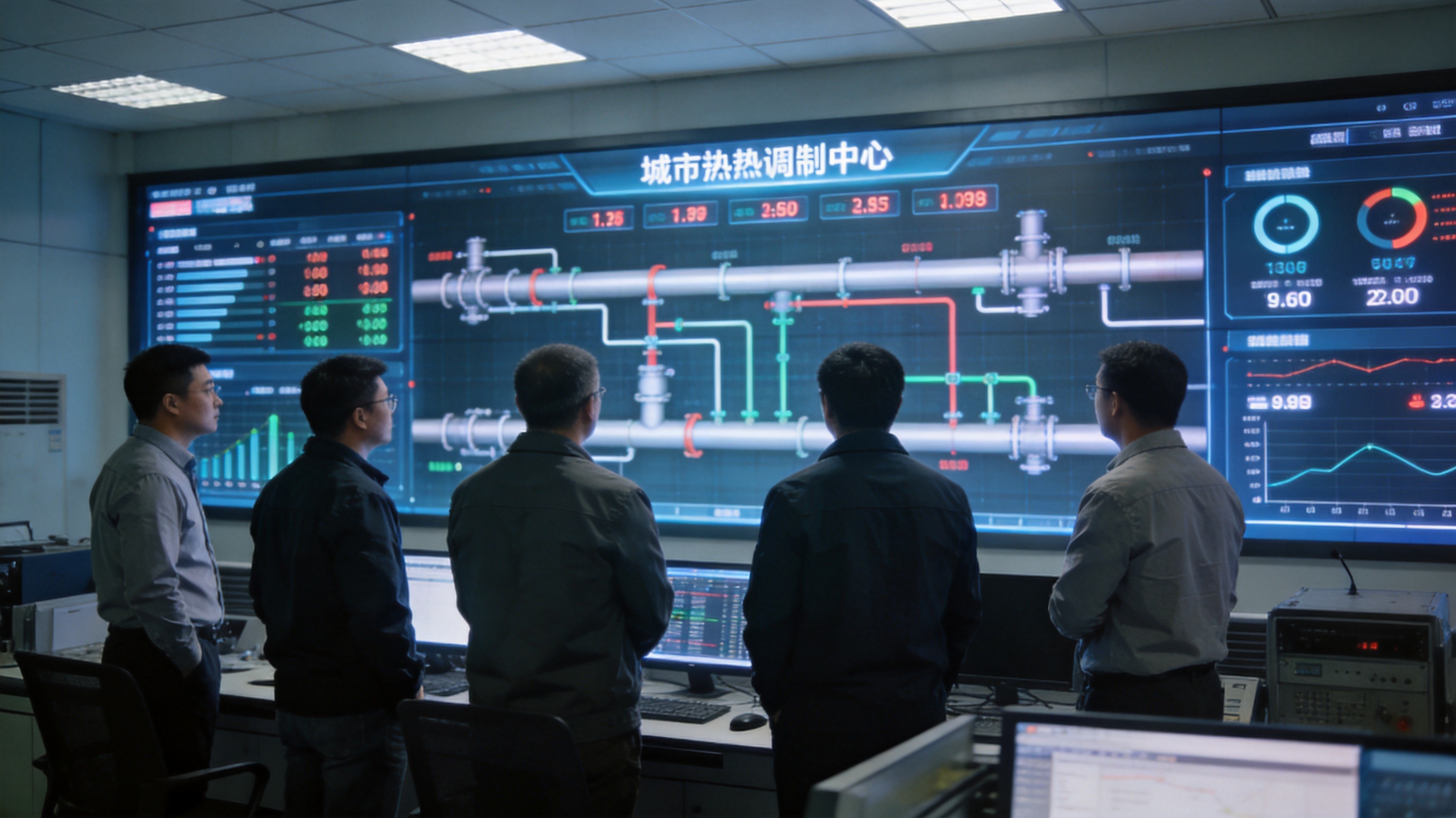
First, clarify "what to manage, how far to manage, and how to meet standards" to avoid repeated changes in criteria after launch. It's recommended to break down the scope into heat source, primary network, heat exchange stations, secondary network, buildings, and household terminals, and specify whether heat metering, billing, and customer service work orders are included.
Don't just write "energy saving" for indicators; break them down into verifiable data: supply and return water temperature control deviation, secondary supply temperature compliance rate, return temperature improvement, leakage rate criteria, complaint response time, etc. Unclear indicators make unified acceptance difficult.
Five Key Checklists for Smart Heating Systems: From Data to Execution Closed Loop
Checklist 1: Data Collection "Sufficient and Traceable," Not Pursuing Full Point Coverage
Point deployment should first meet decision-making closed-loop requirements, then consider expansion. Priority should be given to ensuring stable reporting of heat source output, key nodes of primary network, primary/secondary sides of heat exchange stations, water replenishment and power consumption, outdoor temperature and other data, with time synchronization and missing data alarms.
Unified point dictionary: consistent naming across systems for easy reconciliation.
Visible data quality: offline rate, abnormal values, and verification records can be exported.
Traceable collection and control chain: parameter changes, issuance, and execution all have logs.
Checklist 2: Control Strategy First "Station-Level Usable," Then Network-Wide Optimization
The practical approach is to first stabilize the heat exchange stations: create reusable templates for secondary supply temperature curves based on outdoor temperature, pump variable frequency control, differential pressure control, valve position limits, etc., and then gradually layer on zoned dispatching and network-wide optimization.
A common problem is writing strategies without "manual-automatic integration": who takes over when automation fails, what thresholds trigger return to automatic mode, and whether there's protection for out-of-limit conditions. Writing switching rules into procedures is often more reliable than adding more algorithms.
Checklist 3: Metering, billing, and customer service must reconcile—no breaks in the business chain

Users care most about "whether the accounts match." If the system only manages operations without connecting to business processes, its value is hard to demonstrate. It's recommended to at least integrate heat meter/area caliber, user profiles, payment status, service suspension/restoration, and work order closure loops, enabling dispatchers to correlate "whether high complaint volumes are due to low secondary supply temperature."
The key to reconciliation lies in unified calibers: data collection cycles, makeup reading rules, refund/supplement conditions, and linkage between shutoff valve control and billing status must all be agreed upon in advance and support configuration.
Checklist 4: Operations & maintenance delivery must be "replicable"—turn field work into standard procedures
Whether long-term stable operation is achievable depends on whether O&M is standardized. Embed inspection, calibration, spare parts, and tiered fault response into the platform: equipment inventories, communication topology, alarm handling cards, and key parameter baselines.
Alarm tiering: unified thresholds and response time limits to avoid "seeing it but not knowing whether to act."
Remote maintainability: parameter delivery, upgrades, and point mapping should minimize field visits.
Actionable training: teams can independently "adjust parameters + roll back," not just view dashboards.
Checklist 5: Energy savings and service accounts must be clear—review mechanisms should be routine
During acceptance and renewal, the most powerful evidence comes from reproducible comparisons: changes in unit consumption, electricity consumption, return temperature, and complaint volume under equivalent outdoor temperatures. It is recommended to establish baseline periods and control groups from the beginning, clarify data sources and algorithms, and avoid relying solely on intuition.
Review often gets stuck on "inconsistent calibers." By solidifying calibers into report templates and consolidating data into a unified data warehouse, the system can truly enter management decision-making.
Smart Heating System Acceptance and Expansion: Run a Pilot Zone First, Then Scale Up

The recommended implementation pace follows "pilot zone—district—full network": the pilot zone validates data, strategies, operations, and reconciliation; the district phase verifies adaptation to different station types and pipe networks; the full network then introduces more refined optimization models, with more controllable risks.
During selection or project initiation, you can use these 5 checklists to compare solutions and deliverables item by item: clearly defined calibers, achievable closed loops, replicable operations—making it easier for the system to progress from "go-live" to "sustained results."
FAQ
QHow should boundaries and metrics be defined during smart heat supply system project initiation or acceptance to avoid disputes?
AFirst break down the control scope into heat source, primary network, heat exchange stations, secondary network, buildings, and household terminals, and clarify whether it includes heat metering, billing, and customer service workflows. Metrics must move from energy-saving slogans to verifiable data specifications, such as supply/return water temperature control deviation, secondary supply temperature compliance rate, return temperature improvement, leakage rate, and complaint response time. Each metric needs clearly defined data sources, statistical periods, and calculation rules to facilitate unified acceptance and review.
QHow should data points for smart heating be planned to be both adequate and traceable?
APrioritize points needed for decision-making closed loops rather than pursuing full coverage: heat source output, key primary network nodes, primary/secondary sides of heat exchange stations, water replenishment and power consumption, outdoor temperature, etc., must report stably. Unify point dictionaries and naming conventions to ensure cross-system reconciliation consistency, with time synchronization, absence alarms, and data quality visualization (offline rate, anomalies, exportable verification records). Also retain acquisition-control chain logs to ensure full traceability of parameter changes, issuance, and execution.
QHow can operational control, metering and billing, customer service, and maintenance be integrated into a sustainable closed loop?
AStabilize control strategies at the station level first: secondary supply temperature curves based on outdoor temperature, pump frequency conversion, differential pressure control, valve position limits, etc., forming reusable templates, with manual/auto switching, over-limit protection, and auto-return rules written into protocols. On the business side, at least integrate heat meter or area-based billing, user profiles, payment status, service suspension/restoration, and work order closure to enable correlation between complaints, supply temperature, and billing. On the maintenance side, standardize inspection, calibration, spare parts, alarm prioritization, and handling procedures into standard actions, piloting in sample zones before replicating across sections and the entire network.
