

Smart Heating—Architecture Design of Smart Heating in the Digital Era
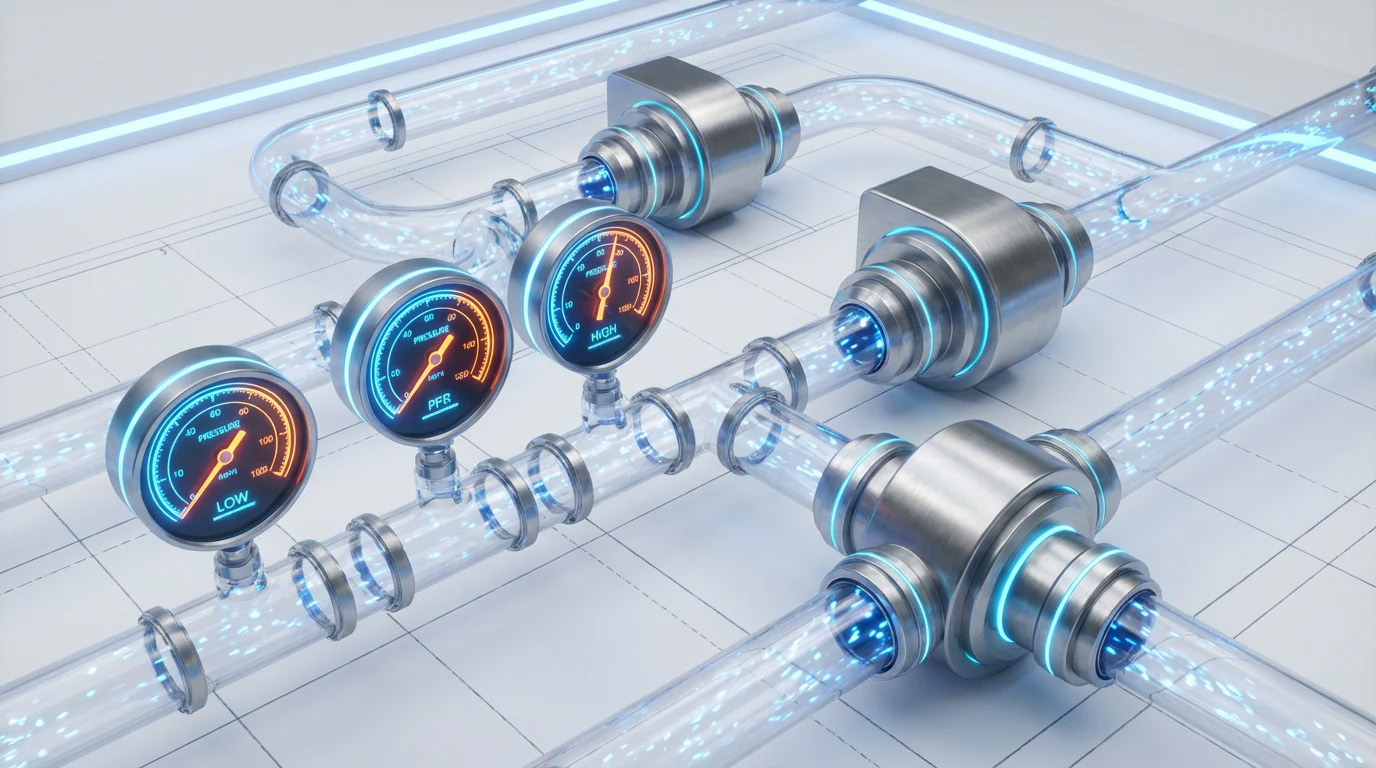
The smart heating system is a digital and intelligent upgrade of the traditional heating system, aiming to achieve efficient, reliable, clean, flexible, and user-friendly full-process management of thermal energy production, transmission, distribution, and consumption. This is not only a deep integration and application of various advanced technologies, but also a systematic transformation. It relies on core technologies such as the Internet of Things (IoT), big data, artificial intelligence (AI), and cloud computing to conduct comprehensive perception, intelligent analysis, and optimal regulation of heat sources, pipe networks, heat exchange stations, and user terminals.
To achieve functional modularization and facilitate expansion and upgrading, an ideal smart heating system should adopt a four-layer hierarchical architecture design: perception layer, transmission layer, data layer, and application layer.
1. Perception Layer: Comprehensive Perception of System Status
The perception layer is the "nerve endings" of the system, mainly composed of intelligent sensors and instruments deployed at various links of the heating system, used to collect key operational data in real time. Including:
◇Physical parameters: temperature, pressure, flow rate, heat (through smart heat meters)
◇Equipment status: pump operating frequency, motor current, valve opening, equipment operation/fault signals.
◇Environment and medium: water quality parameters (such as pH value, hardness), meteorological information (outdoor temperature), etc.
This high-precision, real-time data serves as the fundamental basis for the system to achieve precise regulation, optimized operation, and intelligent decision-making.
2. Transmission Layer: Building Reliable and Efficient Data Channels
The transmission layer is the "information highway" connecting the perception layer with upper-level systems, undertaking the core tasks of data aggregation, reliable transmission, and secure interaction.
(1) Local Connection and Aggregation:
At key nodes such as heating stations and heat source plants, equipment (sensors, actuators) typically connects to Programmable Logic Controllers (PLCs) or local edge gateways/controllers through industrial serial interfaces such as RS-485 or RS-232, using mature industrial communication protocols such as Modbus (RTU/TCP), to achieve local monitoring and basic control.
Data from building-side equipment (such as unit heating entrance devices and user heat meter sets) is similarly aggregated to building data collectors or concentrators through serial ports and industrial protocols.
(2) Remote Transmission and Cloud Upload:
The aggregated data is transmitted in real-time and stably to the cloud or enterprise data center servers through 4G, 5G, or other cellular mobile communication technologies, or via fiber optic private networks, enabling wide-area interconnection and sharing of data.
IoT protocols (such as MQTT) play an important role at this layer, not only for data upload but also for secure and efficient delivery of cloud control commands to edge devices (such as PLCs).
(3) Widespread Application of Wireless Technologies:
Low Power Wide Area Network (LPWAN): NB-IoT and LoRa technologies, with their characteristics of low power consumption, wide coverage, and massive connectivity, are widely applied in scenarios such as user heat meters, distributed pipeline network monitoring points, and building data collection equipment.
Short-range wireless: Zigbee (self-organizing network, low power consumption, suitable for multi-room thermostat networking within buildings), Wi-Fi (office areas, control rooms), Bluetooth (BLE) (equipment commissioning, mobile terminal access) are flexibly applied in indoor temperature and pressure sensors, user smart terminals, etc.
Cellular networks: 4G provides wide coverage and relatively high bandwidth; 5G, with its ultra-reliable low-latency communication, offers a superior choice for critical control commands (such as precise valve regulation) and massive IoT device connectivity.
(4) Core Functions:
The transmission layer is not only responsible for data transmission but also needs to perform preliminary data aggregation, format conversion, encryption, and ensure the stability, real-time performance, and security of the transmission process, providing high-quality data streams for upper layers.
3. Data Layer: Building a Unified and Intelligent Data Center
The data layer is the "brain core" of the intelligent heating system, responsible for the access, storage, governance, integration, and value extraction of massive, multi-source heterogeneous data, providing strong support for upper-layer applications.
(1) Data Composition:
◇Collected Information Data: Various types of equipment real-time operational data obtained by the perception layer and the historical time-series datasets they form.
◇Business Information Data: Building Information Modeling (BIM)/infrastructure information, user profiles, Geographic Information System (GIS) data, billing records, equipment full lifecycle ledgers, meteorological data, energy price information, etc.
(2) Core Mission and Capabilities:
◇Unified Access and Integration: Breaking down "data silos" to achieve standardized access and integration of multi-source heterogeneous data from heat sources, pipeline networks, heat exchange stations, users, and external sources (weather, power grid).
4. Application Layer: Driving Business Value and User Experience Upgrades
The application layer directly addresses heating business needs and user services, integrating data and capabilities provided by lower layers to build intelligent, scenario-based functional modules and application systems, achieving refined management, intelligent decision-making, and quality services for heating systems.
(1) Core Functional Module Examples:
◇Intelligent Scheduling and Optimization: Based on load forecasting, full-network simulation (digital twin), and multi-objective optimization algorithms, achieving heat source coordination, dynamic pipeline network balancing, and on-demand heating to maximize system energy efficiency and economy.
◇Equipment Management and Predictive Maintenance: Monitoring equipment health status, using AI for fault diagnosis and lifespan prediction, transforming from passive emergency repairs to proactive maintenance.
◇User Service Platform: Providing mobile App/Web portal, supporting users with online payment, repair reporting, indoor temperature monitoring and adjustment (within authorized scope), heat usage inquiry, bill management, obtaining energy-saving recommendations, etc. Integrating "one-code" service to simplify user operations.
◇Energy Efficiency Analysis and Carbon Management: Multi-dimensional analysis of system energy consumption, identifying energy-saving opportunities, tracking and optimizing carbon emissions.
◇Operation Monitoring and Emergency Command: Panoramic visual monitoring of system operation, rapid fault location (such as leaks), assisting emergency decision-making and scheduling.
(2) Future Outlook
High-quality data is the "fuel" for continuous AI learning and upgrading. As AI technology advances, deep interaction between the data layer and application layer will unleash greater potential, enabling intelligent heating systems to play a revolutionary role in efficiency, resilience, low carbon, and user experience.
FAQ
QWhat problems does each of the four layers of the smart heating architecture solve?
AThe perception layer is responsible for collecting key data such as temperature, pressure, flow, heat quantity, and equipment status at heat sources, pipe networks, heat exchange stations, and user sides. The transmission layer completes local aggregation, remote cloud connectivity, protocol adaptation, and secure transmission, ensuring stable and controllable data pathways. The data layer uniformly integrates and governs multi-source data, supporting integrated analysis and sharing. The application layer transforms data capabilities into business functions such as dispatching optimization, equipment management, user services, and energy efficiency analysis.
QWhat communication methods and protocols are commonly used in the transmission layer, and how to choose?
AStation-side local connections typically use RS-485/RS-232 to interface with PLCs or edge gateways, combined with Modbus RTU/TCP to achieve stable industrial data acquisition and control. Wide-area transmission can use 4G/5G or dedicated fiber networks to send data to the cloud or data centers, with MQTT for data reporting and control command distribution. User heat meters and distributed points often use LPWAN technologies like NB-IoT and LoRa to balance coverage and power consumption; indoor building environments can use Zigbee, Wi-Fi, or BLE to meet networking and operation & maintenance needs. Selection must comprehensively consider coverage range, latency reliability, bandwidth, power supply conditions, and security compliance requirements.
QWhat data needs to be integrated in the data layer, and why is breaking data silos emphasized?
AThe data layer must integrate both real-time and historical time-series data from equipment, as well as business and external data such as BIM/GIS, user profiles, billing records, equipment ledgers, weather, and energy prices. Only after multi-source heterogeneous data is standardized can it support cross-segment load forecasting, network-wide simulation, and energy efficiency assessment, avoiding inconsistent decision-making caused by fragmented system management. Data governance also relates to consistent calibration, traceability, and shareability, providing a reliable foundation for upper-layer intelligent dispatching, fault diagnosis, and carbon management. High-quality data directly impacts AI model training effectiveness and continuous iteration capabilities.
