

NBT400 Embedded Room Temperature Collector
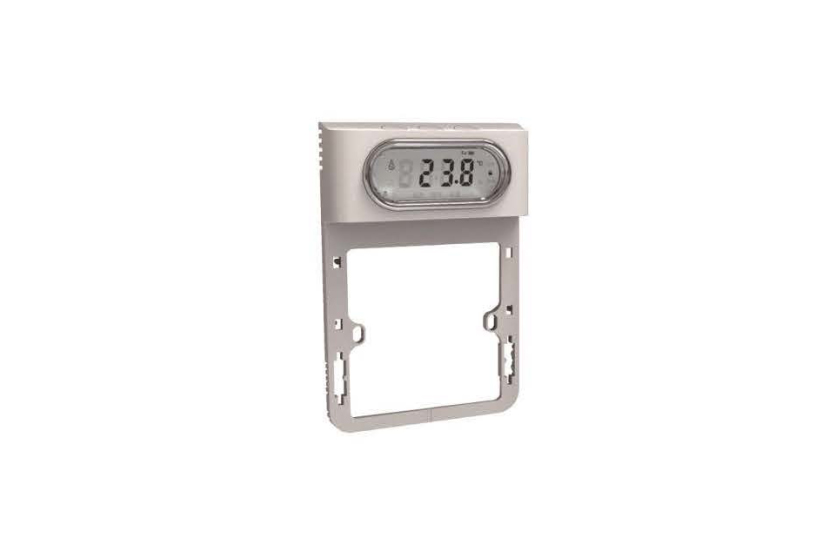
The NBT400 Embedded Room Temperature Collector is designed for the heating industry. It integrates an NB-IoT module for network communication and can monitor the temperature or temperature and humidity in residents' homes through its internal temperature sensor or temperature and humidity sensor. It is installed in series with the live wire circuit and powered by a single live wire. Data is transmitted directly to the thermal energy consumption monitoring and balancing system, providing actual temperature or temperature and humidity conditions in residents' homes to improve heating quality.
FAQ
QWhat heating scenarios is the NBT400 Embedded Room Temperature Collector suitable for?
AIt is suitable for heating operation and regulation scenarios that require obtaining real indoor temperature or temperature and humidity data from residents' homes. It transmits collected indoor data to the thermal energy consumption monitoring and balancing system, facilitating operation and maintenance teams to perform balancing and quality assessment. It is particularly valuable for projects that need to enhance refined heating management and reduce experience-based adjustments.
QHow does the NBT400 collect and upload indoor temperature or temperature and humidity data from residents' homes?
AThe device can use an internal temperature sensor or temperature and humidity sensor to monitor the indoor environment of residents' homes. On the communication side, it integrates an NB-IoT module to report data through cellular IoT networks. Data can be directly fed into the thermal energy consumption monitoring and balancing system, forming field-based evidence for regulation and analysis.
QWhat are the requirements for the NBT400 installation and power supply method?
AThe NBT400 is installed in series with the live wire circuit and powered by a single live wire. This method reduces the complexity of additional power wiring, but requires on-site confirmation that wiring conditions and construction specifications can meet the requirements. During implementation, it is recommended to plan the installation location and construction process in conjunction with system access points and line safety requirements.
