

Baotou Zhongguan Environmental Protection Technology Development Co., Ltd. - What Does 'Treating Winter Diseases in Summer' in Heat Supply Really Address?
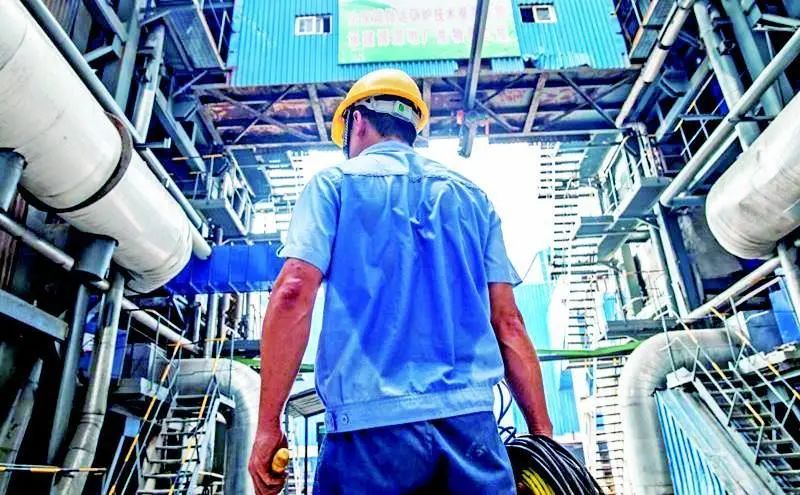
"Treating winter diseases in summer" for heating systems is particularly important. "Summer inspection" mainly involves comprehensive organization based on the operation of the previous heating season, identifying potential faults, and conducting detailed and comprehensive maintenance and renovation of key heating components such as equipment and pipelines. At the same time, maintenance and upkeep are performed on the heating system including equipment and pipelines.
If we compare the heating system to a human body, then the boiler equipment is the brain, the heat exchange station is the heart, and the heating network is the main artery. Annual inspection and technical renovation naturally becomes the core work of heating professionals.
The ultimate goal of all these tasks performed by the heating department is to make the radiators at the user end heat up and ensure room temperature meets standards. What exactly does "treating winter diseases in summer" in heating address?
Part 1
Inspection and Maintenance of Heating Equipment and Pipelines
The inspection and technical renovation of heating equipment is a key focus of non-heating season renovation work, directly related to the safe and stable operation of heating equipment during the heating season. Equipment maintenance and pipeline inspection - summer is the best time for heating system check-ups.
The heating network connects heating enterprises with thousands of households, undertaking the distribution work of heat sources. The sound operation of the heating network ensures the heating quality for residents. From inspecting heating pipes to replacing aging equipment; from cleaning heat exchange plates to inspecting and replacing valves everywhere, no detail can be overlooked. If any preparation is inadequate, various problems may occur during winter heating.
After a winter season of use, various equipment in the heating system may develop some hidden problems. During summer, it is necessary to inspect and maintain each component of the system to eliminate potential equipment failures and address issues accordingly, so that the system equipment can operate normally when the heating season arrives.
Part 2
Heat Supply Renovation
Rectifying problems discovered in winter that affect heating quality is one of the important tasks during the non-heating period.
Heat supply renovation projects involve a wide range of specific work: renovation of heating source systems, renovation of primary and secondary heating pipe networks, renovation of heat exchange stations, renovation of indoor heating systems, and more.
Every task that heating professionals do during this season provides strong guarantees for winter heating. This is a tough battle no less challenging than winter heating itself, directly related to the safe and stable operation of heating equipment during the heating season.
Part 3
Improving Customer Service Systems
Establish a complete customer information system, proactively understand user needs, indoor temperatures, heat usage conditions, etc., through customer visits, solicit user opinions and suggestions, and solve related problems for users.
For example, in response to issues such as aging customer service billing system equipment, outdated systems, and incomplete functions, some enterprises will upgrade system software and hardware, replace ordinary phones with program-controlled phones, and expand functions such as voice services, work logs, report output, and bulk SMS messaging.
Part 4
Building Smart Heat Networks
The Smart Heating Network Dispatch and Command System uses advanced technologies such as the Internet and mobile Internet to uniformly monitor and manage network-wide parameters, real-time and comprehensively monitor the operating conditions of the heating system, observe the pressure difference at the most unfavorable operating points, coordinate heat source supply to adapt to changes in heating network load, and achieve balanced heating in winter.
With the accumulation of every piece of heating data, the smart heating network will summarize and conclude, improving the scientificity and stability of temperature curves. Heat exchange stations will achieve a working state of "unattended operation with manned inspection," and heating communities will also achieve a state of "stable heating, balanced heating, and comfortable heating."
Part 5
Accelerating Clean Heating
The demand for urban central heating industry in our country continues to grow, and clean energy heating that is environmentally friendly and energy-saving is the main direction of future development.
In recent years, in order to control environmental pollution, national policies have continuously strengthened the clean energy heating industry, constantly providing policy and financial support. The Ministry of Environmental Protection will join relevant departments to comprehensively intensify efforts to eliminate coal-fired boilers, replacing them with cogeneration central heating, gas heating, and electric heating. Some local governments must, before the next heating season arrives, expedite the expansion and transformation of rural power grids and the extension coverage of gas pipeline networks, and complete the insulation renovation of rural housing and the installation of electric heating equipment.
Part 6
Industry Skills Training
Today, the technological content of the heating industry is increasing, and heating professionals must continuously improve their professional skills to adapt to new equipment, technologies, and situations.
Among them, technical exchange seminars are the most common form, aiming to enable heating professionals to absorb more industry information and advanced technical knowledge through technical exchanges and discussions, and to understand up-to-date heating solutions by analyzing successful cases, keeping pace with industry development.
After all, heating professionals face unprecedented pressure and challenges in the transformation and upgrading of heating systems. Only through continuous learning can they improve their competitiveness.
The inspection and maintenance that everyone imagines may seem like a simple task. But in actual engineering projects, due to continuous high temperatures during summer, with ambient temperatures often exceeding 40℃, on-site inspection and renovation are extremely difficult. When everyone else is seeking relief from the heat, heating professionals on the front line brave the scorching heat to stick to their posts, climbing pipes, descending into wells, shuttling through the city's underground, conducting multiple "summer inspections" on heating equipment and the like, making tireless efforts so that residents can enjoy a warm winter.
Let us thank every heating professional who silently contributes behind the scenes in the scorching heat!
Baotou Zhongguan Environmental Protection Technology Development Co., Ltd. is a high-tech enterprise specializing in providing smart heating informatization products and services. The company is committed to the research, development and application of energy-saving product technologies, and has independently developed a series of hardware and software products that can provide thermal enterprises with advanced fully integrated smart heating solutions, solving problems of uneven heating and high energy consumption among users in heating systems, achieving dual economic and social benefits of heating balance and energy conservation, reduced carbon emissions, and fewer complaints.
FAQ
QWhat specific work does 'treating winter diseases in summer' typically involve to ensure stable winter heating?
AKey tasks include equipment and pipeline network maintenance, hidden risk inspection, and necessary technical upgrades such as valve replacement, heat exchanger plate cleaning, and outdated equipment renewal. During the non-heating period, special rectification is also conducted on heating quality issues exposed in winter, covering heat sources, primary and secondary pipeline networks, heat exchange stations and indoor systems. The goal is to ensure safe and stable equipment operation during the heating season and meet user-end temperature standards.
QWhat pain points of heating enterprises does smart heating network construction primarily address?
ASmart heating networks enable unified monitoring and management of operational parameters across the entire network, providing real-time insight into operating conditions and monitoring pressure differentials at the most unfavorable points, facilitating coordination of heat source supply to adapt to load changes. Based on data accumulation, temperature curves are optimized to improve heating stability and controllability. Heat exchange stations can gradually achieve unmanned operation with scheduled inspections, promoting stable and balanced heating in residential areas and reducing complaints caused by uneven hot and cold conditions.
QUnder the clean heating trend, what upgrades and supporting measures do centralized heating enterprises need to prepare in advance?
ADirections include reducing coal-fired boiler usage and gradually transitioning to cleaner pathways such as combined heat and power centralized heating, gas heating, and electric heating. Implementation typically involves gas pipeline network extension and coverage, power grid expansion and upgrades, as well as supporting measures like rural housing insulation retrofits and electric heating equipment installation. Enterprises also need to coordinate equipment updates, heating network adaptation and staff skill training in line with policy and funding support timelines to avoid disconnection between upgrades and operations.
