

Quality Management System Certification Certificate
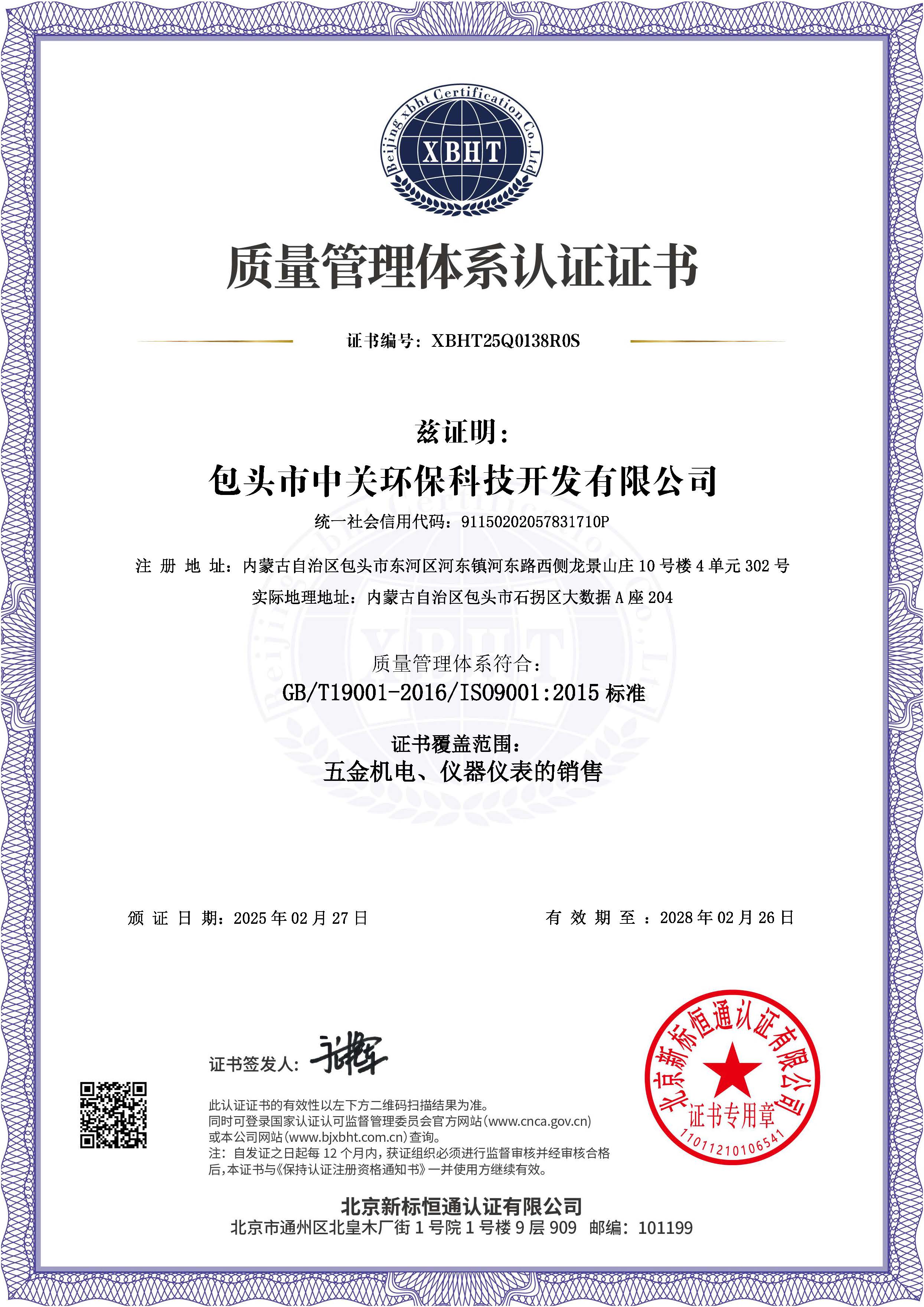
Baotou Zhongguan Environmental Protection Technology Development Co., Ltd. is a high-tech enterprise specializing in providing smart heating informatization products and services. The company is committed to the research, development, and application of energy-saving product technologies. It has independently developed a series of software and hardware products, capable of providing advanced fully integrated smart heating solutions for heating enterprises. These solutions address issues such as uneven heating distribution and high energy consumption in heating systems, achieving heating balance and energy conservation, reducing carbon emissions, lowering complaints, and delivering dual economic and social benefits.
FAQ
QWhat are the main heating pain points addressed by the fully integrated smart heating solution?
AIt focuses on common issues such as uneven heating distribution among users and high system energy consumption. Through integrated software and hardware monitoring, analysis, and control measures, it promotes heating balance and energy-efficient operation. Results are typically reflected in operational improvements such as reduced carbon emissions and decreased complaints.
QHow should heating enterprises evaluate compatibility when introducing smart heating informatization products?
AFirst, clarify target scenarios such as improving heating balance, reducing energy consumption, or decreasing user complaints, and organize existing system data sources and accessible integration points. Evaluate whether the solution covers integration capabilities for key links, including equipment layer, platform layer, and operational management processes. It is also necessary to consider the capabilities of existing operation and maintenance teams and daily management mechanisms to confirm sustainable operation and iterative optimization.
QWhat implementation preparations are generally required for landing integrated smart heating software and hardware?
AA baseline survey of the current heating system status is needed, including pipeline networks, station facilities, metering and control equipment configurations, as well as data collection and communication conditions. Simultaneously plan system access and permissions, data governance, and operation and maintenance division of responsibilities to avoid post-launch data unavailability or unclear accountability. During implementation, phased access and commissioning can be adopted to minimize impact on existing heating operations.
