

Anti-Water Loss Ultrasonic Heat Meter
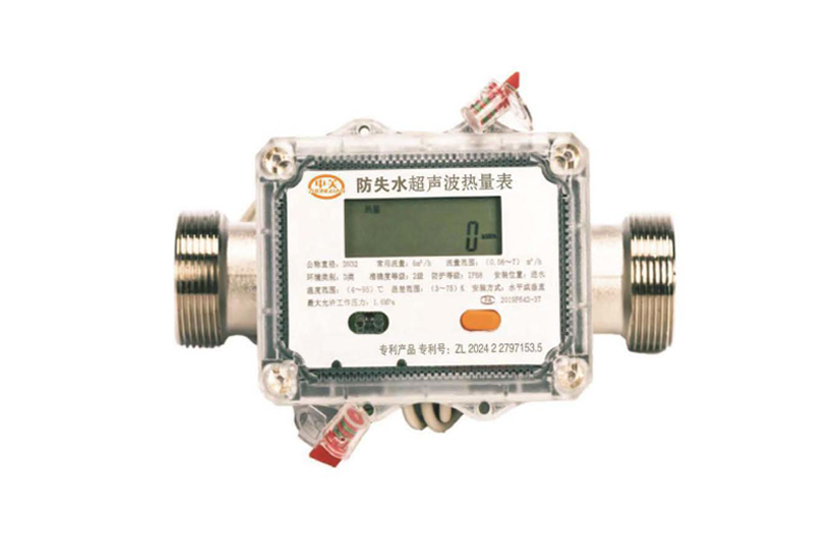
Zhongguan Smart Heating's new patented product, the "Water Loss Prevention Heat Meter," can effectively prevent heat users from illegally stealing hot water from the heating system and send an immediate alarm to the heating company's management backend. The backend can remotely control the user, reducing economic losses caused by water loss for heating enterprises.
Product Introduction
The DYH ultrasonic heat meter consists of a flow sensor, paired temperature sensors, and a calculator, featuring compact structure and convenient installation. This product adopts high-quality piezoelectric ceramic transducers to ensure measurement accuracy and stability. The product has no mechanical rotating parts, no wear, is not easily affected by water quality, and has low maintenance costs. It can be installed horizontally or vertically, and the installation position can be selected on the inlet or return pipe according to user needs (must be pre-selected). Optional photoelectric or M-Bus interfaces can be configured according to user requirements to achieve remote automatic meter reading function for centralized management.
Technical Parameters
Complies with GB/T 32224-2015 design standard.
Cooling/heating measurement meets Class 2 metering accuracy requirements.
Can store data from the last 18 months, supports data query, data is not lost after power failure.
Equipped with optical/M-Bus interface for easy function expansion and network meter reading.
Features temperature, flow, and battery self-diagnosis function to prevent heat loss.
Low starting flow rate with high metering accuracy.
Low power consumption design, battery life of more than 6 years.
Adopts ultrasonic flow measurement technology, no magnetic field interference, no mechanical rotating parts, no wear, high reliability, low maintenance cost.
Adopts new protection technology, protection level reaches IP65.
Supports horizontal and vertical installation for easy construction.
Functional Features
Cooling and heating measurement and data display.
Supply and return water temperature and temperature difference measurement and display.
Thermal power measurement and display.
Flow measurement and display.
Cumulative flow measurement and display.
Data storage and query.
Automatic power status monitoring.
Fault status recording and display.
Patent Certificate
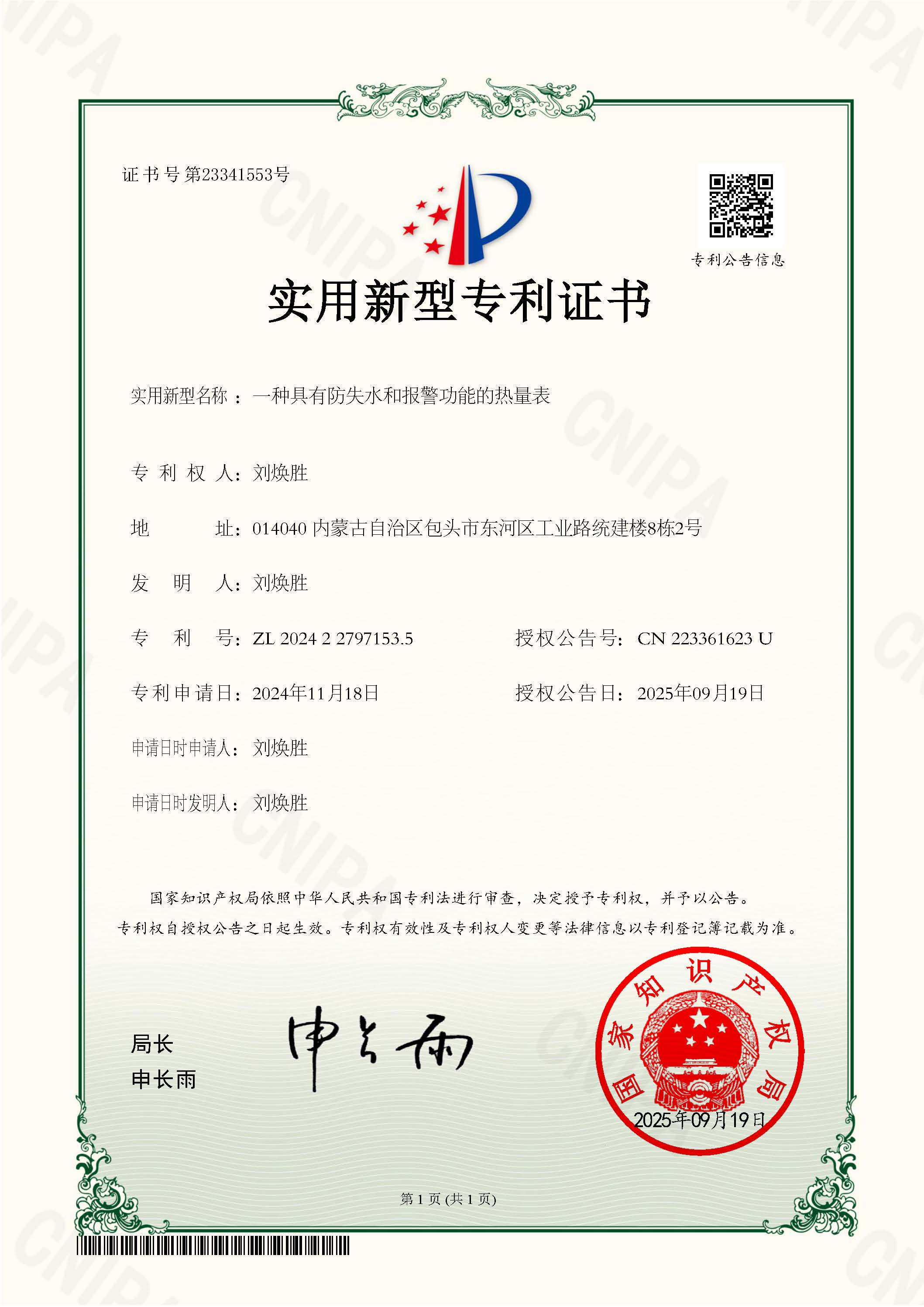
Heat Meter with Water Loss Prevention and Alarm Function - Utility Model Patent Certificate
FAQ
QHow does the Anti-Water Loss Ultrasonic Heat Meter identify and handle unauthorized water drainage or hot water theft by users?
AThe product features anti-water loss and alarm functions, which can send alerts to the heating company's management backend immediately when abnormal water usage behavior occurs. Upon receiving the alarm, the backend can remotely control the relevant users to reduce the impact of continued water loss. Actual handling strategies need to be implemented in combination with the enterprise's management system and platform linkage capabilities.
QWhat installation methods are suitable for the DYH-type Ultrasonic Heat Meter? Should it be installed on the supply or return pipe?
AThe meter supports horizontal or vertical installation. The installation position can be on the inlet or return pipe, but must be pre-selected before installation. Selection should comprehensively consider on-site pipe network structure, construction convenience and maintenance accessibility. To ensure metering consistency and future operation and maintenance, it is recommended to unify the installation diameter and position scheme within the same project.
QWhat centralized management benefits can be gained by choosing optical or M-Bus interfaces?
AOptical or M-Bus interfaces can be used for function expansion and network meter reading to achieve remote automatic meter reading, reducing manual door-to-door meter reading costs and management fluctuations. Combined with 18-month data storage and query capabilities and power-failure data retention, it facilitates tracing heat consumption data and accounting. Interface selection typically depends on existing meter reading systems, wiring conditions and future expansion requirements.
